Custom Cabinets for Hawaii Homes require a different approach than cabinets built for mainland houses. The islands bring warm air, salty breezes, and year round moisture that can warp wood, peel finishes, and even invite mold. Homeowners who understand these challenges early can avoid costly repairs down the road. This guide walks through what actually matters when choosing cabinetry built to handle island weather.
Whether you are renovating a kitchen or updating a bathroom vanity, the right materials and design choices make all the difference. Let’s look at why humidity is such a big factor and how you can plan around it with confidence.
Why Humidity Changes the Cabinet Game in Hawaii
Hawaii’s climate stays warm and humid throughout most of the year. That constant moisture in the air causes ordinary wood cabinets to expand, contract, and eventually crack or warp. Kitchens and bathrooms face even greater risk since steam, splashes, and daily use add extra exposure. This is exactly why custom cabinets for Hawaii homes need materials and construction methods suited to tropical conditions.
Without proper planning, cabinet doors may stick, drawers may swell shut, and finishes can bubble or peel within a few short years. Choosing the wrong materials early on often leads to premature replacement. A thoughtful design approach solves these issues before they start.
Best Materials for Custom Cabinets for Hawaii Homes
Not every material performs equally well in humid environments. Some options resist moisture naturally, while others need sealants or coatings to hold up over time. Below are materials commonly used for cabinetry across island homes.
- Marine grade plywood, which resists water damage better than standard plywood
- Thermofoil or laminate finishes that seal out moisture completely
- Solid maple or birch treated with water resistant sealants
- PVC or composite cabinet boxes for bathrooms and laundry areas
- Stainless steel hardware that will not rust or corrode over time
Each option balances durability, style, and budget differently. A design consultant can help match the material to your specific room and usage needs.
Cabinet Materials Comparison Table
The table below compares common cabinet materials based on how well they perform in Hawaii’s climate.
| Material | Moisture Resistance | Durability | Best Use |
| Marine grade plywood | High | Long lasting | Kitchen and bathrooms |
| Thermofoil Laminate | High | Moderate | Budget friendly kitchens |
| Solid wood (sealed) | Moderate | High with maintenance | Living areas and pantries |
| MDF (uncoated) | Low | Short lifespan | Not recommended for wet rooms |
| PVC composite | Very high | Long lasting | Bathrooms and laundry rooms |
As shown above, marine grade plywood and PVC composite consistently outperform standard wood or MDF in wet island conditions. Choosing the right base material sets the foundation for cabinets that actually last.
Design Tips to Fight Moisture and Mold
Beyond material selection, smart design choices help cabinets stay dry and functional. Proper airflow around cabinets reduces trapped moisture that leads to mold growth. Sealed edges and finished interiors also block water from soaking into raw wood surfaces. These small details add years to a cabinet’s lifespan.
Consider the following design tips when planning your project:
- Add ventilation gaps beneath sinks and behind cabinet backs
- Choose matte or low gloss finishes that hide moisture spots
- Use soft close drawers and doors to reduce daily wear
- Seal all exposed edges, especially near sinks and stoves
- Schedule routine inspections to catch early signs of swelling
Working with an experienced local team ensures these details are not overlooked. VC Flooring and Stone’s custom cabinets are built with island specific finishes designed for exactly this purpose.
Style Meets Function: Popular Finishes for Island Homes
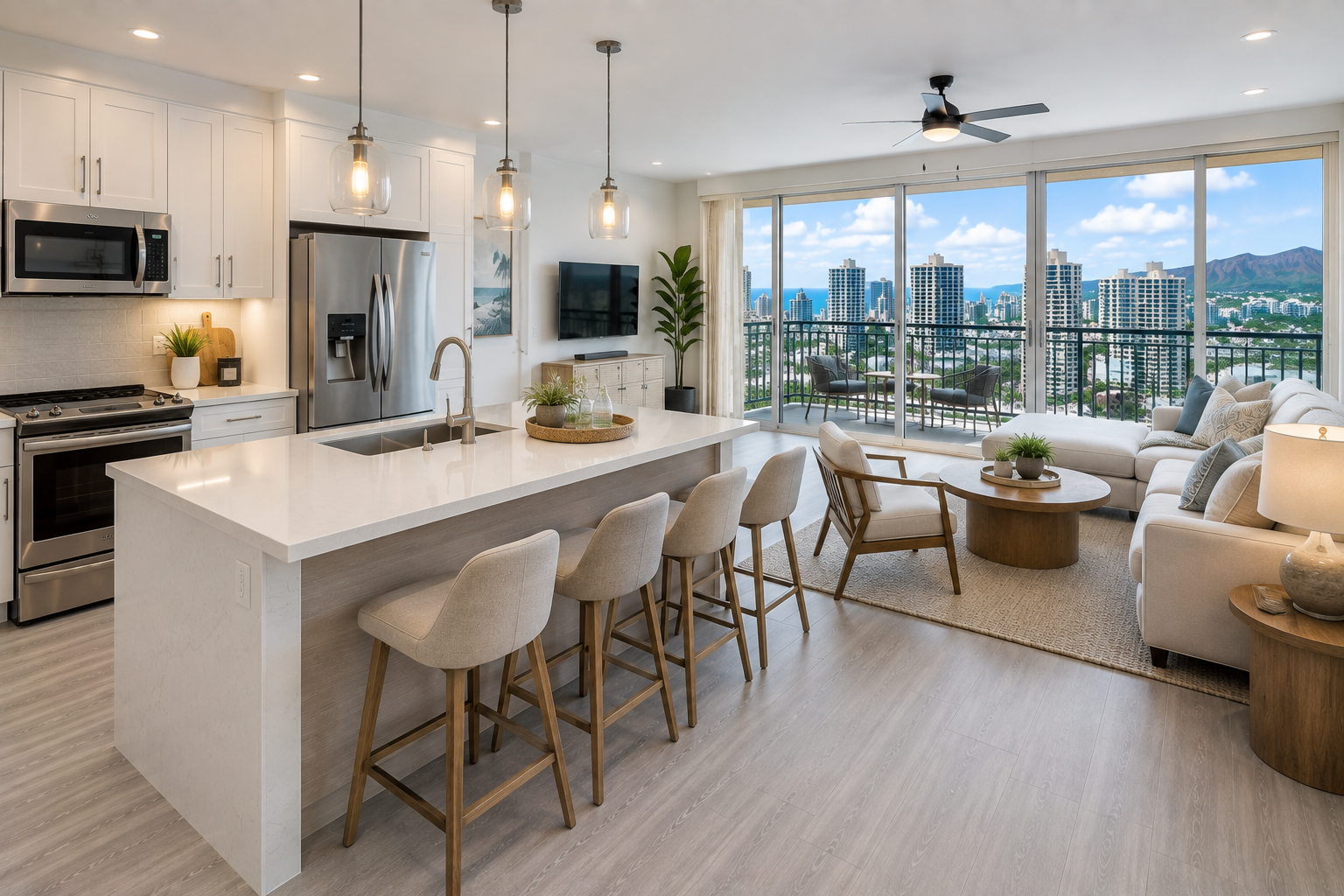
Custom Cabinets for Hawaii Homes do not have to sacrifice style for durability. Many homeowners now choose coastal whites, warm driftwood tones, or matte textures that pair function with a relaxed island look.
These finishes hide fingerprints and daily wear while still resisting moisture. Brushed or glazed finishes also add a polished touch without compromising performance.
Pairing your cabinetry with the right countertop and flooring completes the look. Many homeowners combine their new cabinets with moisture resistant countertops and durable vinyl flooring for a fully coordinated, humidity ready space. This approach keeps the entire room protected, not just the cabinetry.
Frequently Asked Questions
- How long do custom cabinets last in Hawaii’s climate? With proper materials and maintenance, quality cabinets can last fifteen to twenty years, even in humid conditions. Cheaper materials without sealing often fail within five years.
- Are wood cabinets a bad choice for Hawaii homes? Solid wood can work well if it is properly sealed and finished. However, many homeowners prefer marine grade plywood or PVC composite for added peace of mind.
- Can existing cabinets be treated for better moisture resistance? Yes, applying water resistant sealants or replacing damaged panels can extend the life of existing cabinets. A professional consultation helps determine if repair or replacement makes more sense.
- Do custom cabinets cost more than stock options? Custom cabinets typically cost more upfront, but they are built to fit your space precisely and use materials suited for Hawaii’s climate. This often means fewer repairs and replacements over time.
Final Thoughts and Next Steps
Choosing custom cabinets for Hawaii homes is about more than style. It is a practical decision that protects your investment against the islands’ constant humidity. From marine grade plywood to sealed finishes and smart ventilation, every detail matters when building cabinets meant to last. Taking the time to plan properly now saves money and stress later.