
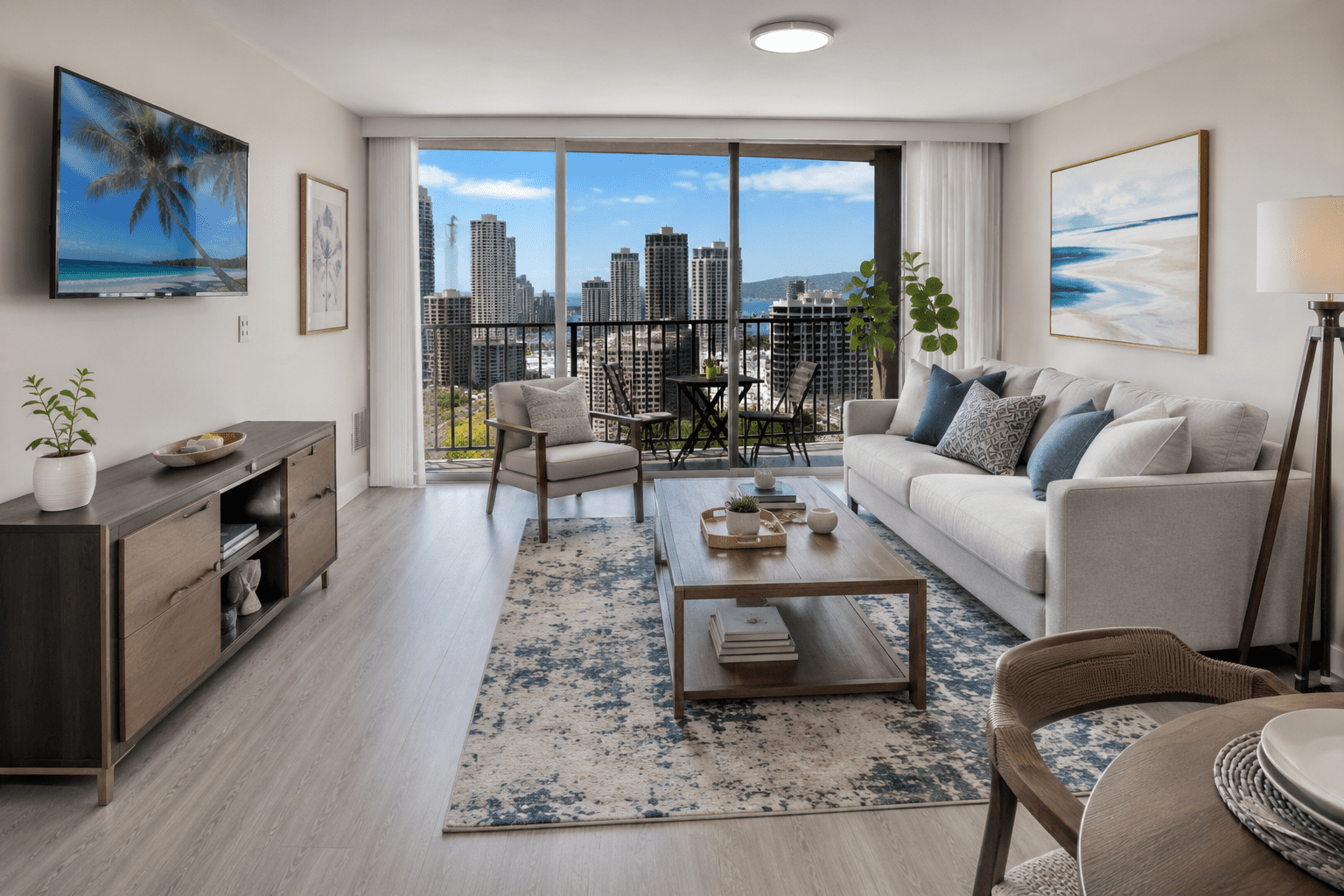
Quick take: Condo flooring in Hawaii has to handle humidity, sand, salt air, sliding-door traffic, and the occasional water leak. The three categories below cover almost every Hawaii condo renovation we touch.
Choosing the right condo flooring is one of the most consequential decisions in any Hawaii renovation. Floors take more wear than any other surface, they cover more square footage than any other material, and they shape how the unit feels the second a buyer or renter walks in.
This guide compares the best condo flooring options for Hawaii, where each one shines, and how the Ohana Package keeps selection, fabrication, and installation under one roof.
Why Condo Flooring Matters More in Hawaii
National data from the NAHB Remodeling Market Index and the Houzz U.S. Renovation Trends Study consistently rank flooring among the top three upgrades that lift resale value.
By the numbers:
- Roughly 1 in 10 U.S. homeowners renovate a kitchen each year (Houzz Kitchen Trends Study), and flooring is almost always part of the project
- Updated flooring is one of the top three features buyers cite when comparing comparable condos
- Hawaii ranks among the top states for renovation spend per household
- Premium condo flooring drives higher short-term rental rates for owners renting their units
Beyond the numbers, condo flooring is the single largest visual surface in a unit. Get it right and the entire condo reads as more polished. Get it wrong and even great cabinetry and counters fall flat.
The Three Best Condo Flooring Categories
Hawaii condos thrive on three flooring categories. Each has a place. Knowing which is right for your unit comes down to humidity, traffic, layout, and HOA rules.
Porcelain Tile
The workhorse of condo flooring in Hawaii. Porcelain is essentially waterproof, almost impossible to scratch, and available in finishes that mimic wood, stone, or concrete. Large-format porcelain tile is especially good in small condos because fewer grout lines make the floor read larger.
Natural Stone
For owners who want a higher-end finish, sealed natural stone is the choice. Quartzite, granite, and certain marbles all perform beautifully in island conditions when sealed correctly. They warm a space, age with character, and feel substantial underfoot. Browse our natural stone collection for slabs we keep in island inventory.
Premium Luxury Vinyl Tile (LVT)
Modern premium LVT is the surprise winner of the last few years. It’s waterproof, quiet underfoot, easier on the joints than tile or stone, and HOA-friendly because most products meet the sound transmission ratings condo associations require.
How the Three Compare
| Feature | Porcelain Tile | Natural Stone | Premium LVT |
|---|---|---|---|
| Water resistance | Excellent | Good (with seal) | Excellent |
| Durability | Excellent | Excellent | Very Good |
| Comfort underfoot | Firm | Firm | Soft |
| Sound rating (condo) | Needs underlayment | Needs underlayment | Often pre-rated |
| HOA approval ease | Common | Common | Easiest |
| Aesthetic | Modern, versatile | Premium, warm | Wood-look options |
Choosing the Right Condo Flooring for Your Unit
The right condo flooring choice depends on your unit, your usage, and your HOA’s rules.
If You Live There Year-Round
If the condo is your primary residence, prioritize comfort and longevity. Premium LVT or large-format porcelain tile are both strong choices. Sealed natural stone works beautifully in entry, kitchen, and bathroom zones if you want a higher-end finish.
If You Rent Short-Term
For Airbnb and VRBO units, condo flooring durability is the priority. Porcelain tile and premium LVT both stand up to constant turnover better than hardwood or carpet. They’re also easier to clean between guests and resist the sand and water that come through every door in Hawaii.
If You Rent Long-Term
For long-term rentals, look for condo flooring that resists wear and is easy to repair. Premium LVT is often the right choice because individual planks can be replaced without redoing the whole floor.
HOA Considerations
Most Hawaii condo associations have rules about sound transmission. Floors above other units typically require an underlayment that meets a specific IIC and STC rating. Confirm these numbers with your HOA before ordering condo flooring. Browse our flooring options for products that already meet most building requirements.
How the Ohana Package Simplifies Condo Flooring Installation
This is where most owners hit friction. Sourcing the floor is one step. Coordinating the fabricator, installer, HOA approval, and elevator reservation is four more, and they don’t naturally happen at the same speed.
We built the Ohana Package to remove that friction. It bundles condo flooring selection, complementary stone work, and professional installation into one streamlined experience.
What’s Included
- Personalized design consultation with a Hawaii-based specialist
- Curated condo flooring selection from in-island inventory
- HOA documentation help for sound and material approvals
- Precision stone fabrication for paired counter or tile work
- Professional installation by trained, in-house crews
- One point of contact, with no chasing four subcontractors
Why it matters: A bundled approach to condo flooring removes the most common cause of delays: handoffs between vendors who don’t talk to each other. In a condo, where elevator reservations, noise hours, and HOA review all compress the schedule, that speed translates directly into fewer days of disruption.
Built for Condo Owners
The Ohana Package is shaped around what condo owners actually face. We’ve delivered it on Oahu and across the neighbor islands for primary residences, vacation rentals, and full-floor renovations. If you’re not sure how your project fits, schedule a free consultation.
Common Condo Flooring Mistakes to AvoidEven careful owners trip over these:
- Skipping the HOA sound spec. Many buildings require IIC 50 or higher; a non-rated floor can be ripped out at owner expense.
- Choosing finishes from a tiny sample. Always view full-sized condo flooring samples in your actual unit lighting.
- Using mainland-spec materials. Porous stone and untreated wood don’t last in island humidity.
- Ignoring transitions. Plan how the floor meets cabinetry, tile, and lanai thresholds before ordering.
- Hiring four separate vendors. Every handoff is a delay risk; bundled services like the Ohana Package solve it.
A great condo flooring choice rewards planning. Owners happiest with their finished floor are the ones who confirmed HOA specs, viewed full samples, and let their installer coordinate the moving parts.
It depends on usage. Porcelain tile is the most durable, sealed natural stone is the most premium, and premium LVT is the easiest to install in condos with strict sound rules. Most Hawaii condo flooring projects we deliver use one of those three.
Almost always, yes. Most Hawaii condo associations require flooring above other units to meet specific sound transmission ratings. Our team helps owners document and submit approvals as part of the Ohana Package.
A typical condo flooring installation runs 3 to 7 days depending on square footage and material. Underlayment work and HOA-required prep can add 1 to 2 days.
You can, but it’s rarely the right choice. Solid hardwood tends to expand and contract in island humidity, and many HOAs restrict it for sound reasons. Premium LVT mimics hardwood beautifully without the drawbacks.
The fastest path is to schedule a consultation. Bring rough measurements, your HOA flooring rules, and a few inspiration photos.
Choose Your Condo Flooring With Confidence
The right condo flooring lasts decades, lifts resale and rental value, and transforms how your unit feels the second a guest walks in. Porcelain, natural stone, and premium LVT all earn their place in Hawaii projects, and the right choice depends on your unit and your usage.
The Ohana Package is the simplest way to take it from selection to installed floor.