Look, we love living in Hawaii. The beaches, the weather, the lifestyle – it’s pretty much perfect. But let’s be real: our homes take a beating. The humidity makes everything feel damp, sand gets into every corner, and those sudden rain showers send everyone running inside with wet feet.
When my neighbor redid her floors last year, she told me, “Definitely not hardwood again – that warped within three years.” A lot of us have learned the hard way that what works on the mainland doesn’t cut it here. If you’re searching for the best vinyl flooring Hawaii has to offer, you’re already on the right track. Vinyl flooring is honestly a game-changer for island living.
Why Vinyl Flooring Works Here
Hawaii’s climate is beautiful but brutal on floors. If you’ve dealt with warped hardwood or musty carpet after rainy days, you know what I mean. Tile seems great until you’re scrubbing sand out of grout lines every weekend.
My friend from California installed the same oak hardwood she had in her Bay Area home. Within a year, the boards were cupping and separating. The humidity here, 60-80% most days, is relentless.
Today’s vinyl flooring is seriously impressive. I’m not talking about thin, cheap stuff from the ’90s. Modern luxury vinyl plank (LVP) and stone plastic composite (SPC) options have come a long way.
The best part? It’s actually waterproof. Not “water-resistant” – waterproof. When kids track in from the pool, or it’s pouring rain, and everyone’s coming in with wet slippers, you don’t panic. If you live Windward side where it rains every afternoon, this alone is worth it.
Types of Vinyl Flooring
When you’re shopping for the best vinyl flooring Hawaii homeowners trust, you’ll see three main types:
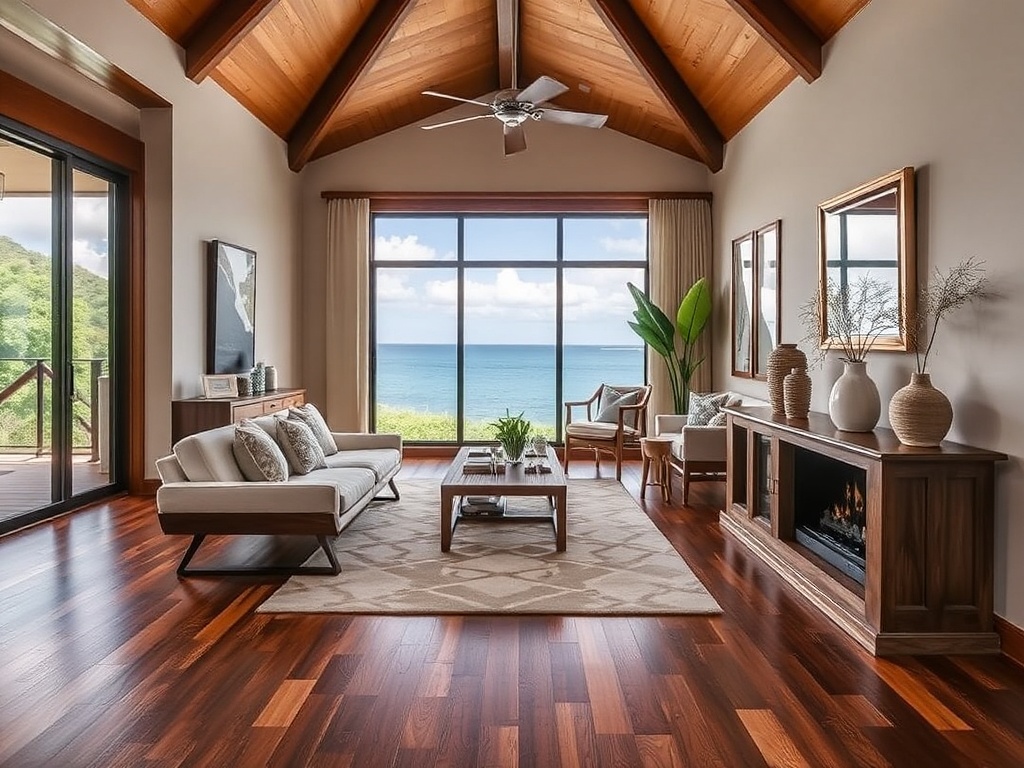
Luxury Vinyl Plank (LVP) looks like wood. Honestly, unless you’re on your hands and knees, you can’t tell it’s not real hardwood. Light oak for that beachy vibe or darker walnut tones – they’ve got it all. The grain patterns look real, the texture feels real. But unlike real wood, you can spill wine and just wipe it up. No drama.
Luxury Vinyl Tile (LVT) looks like stone or ceramic tile. Great for that clean, modern look without cold tile. Plus, it’s way more comfortable when you’re cooking dinner.
Stone Plastic Composite (SPC) is the MVP for Hawaii homes. It’s got a rigid core that makes it super stable and tough. The 7.5mm thick ones with a 20-mil wear layer? Built like tanks. They handle kids, dogs, and that random coral someone brought in. For busy households, this is your best bet.
What Makes It Work for Island Life
It’s Actually Waterproof – My brother-in-law’s washing machine overflowed on his vinyl floor and it was totally fine. Compare that to laminate, which basically dissolves around water. For those of us dealing with humidity or that friend who always spills drinks, this is huge.
Sand Doesn’t Destroy It – Living here means sand everywhere. That stuff is basically tiny rocks that can scratch regular floors badly. But the wear layer on good vinyl just laughs at sand. You still want to sweep regularly (nobody likes crunchy floors), but it won’t leave permanent damage.
Feels Good on Your Feet – Tile can be cold and hard. Vinyl is comfortable – matters when you’re barefoot 90% of the time. It’s neutral temperature with a tiny bit of give, so standing while making dinner is easier on your legs and back.
Cleaning Is Easy – Sweep when it looks dirty. Mop when you feel like it. That’s it. No waxing, no sealing. My sister has three kids and a dog, and spends maybe 10 minutes a week on floors. That’s a maintenance schedule I can get behind.
The Specs That Matter
Thickness – You want around 7.5mm. Thinner stuff feels cheap and doesn’t hold up. Thicker is nice but you’re paying more without much extra benefit. 7.5mm is the sweet spot.
Wear Layer – This protective coating is measured in “mils.” For Hawaii, you want at least 20-mil. That’s commercial-grade protection. With sand, foot traffic, and everything else here, you need that extra protection. It’s the difference between floors looking good for 5 years versus 20 years.
Installation Matters
Vinyl flooring is forgiving, but installation matters in Hawaii. Modern vinyl uses a click-lock system that “floats” over your subfloor, letting it expand and contract with humidity changes.
Use someone who knows Hawaii installations. They need to let the flooring acclimate in your house for a couple of days. They also need small expansion gaps around edges. Skip these steps, and you might get buckling or gaps.
If you’re on a concrete slab (common here), moisture testing is important. Even though vinyl is waterproof on top, you don’t want moisture pushing up from underneath. Good installers check this and use proper moisture barriers.
Design Choices
Vinyl can look like anything you want. Super realistic wood-look planks in every color – driftwood gray for beach house vibes or warm honey tones for traditional styles.
Most people here go for lighter wood tones. They make spaces feel bigger and brighter (the Hawaii aesthetic). Plus they don’t show dirt and sand as much. When you’re sweeping every other day, this matters.
Go with matte finish instead of super shiny. It looks more like real wood and hides scratches better. For modern looks, stone-look vinyl tiles in grays and whites are amazing. Pick something you won’t get sick of – this stuff lasts a long time.
The Cost Reality
When looking at the best vinyl flooring Hawaii has available, vinyl is generally cheaper than hardwood or natural stone. But more importantly, it’s cheaper long-term. No refinishing, less maintenance, lasts forever.
Good quality SPC vinyl is moderate to mid-range price per square foot. Not the cheapest, not the most expensive.
Installation in Hawaii costs more than on the mainland – shipping, labor, the usual. But this applies to any flooring type. Since vinyl is easier to install than tile or hardwood, you sometimes save on labor.
When deciding, I thought: sure, I could go cheaper. But then I’d replace it in 5-7 years. With good vinyl, I’m looking at 15-20 years, maybe more. Better math long-term.
Maintenance (Super Simple)
Sweep or vacuum when you see sand and dirt – every few days depending on traffic. Mop when things look dirty with warm water and pH-neutral cleaner. Don’t use harsh chemicals or rough scrubbing pads.
Put mats by doors to catch sand and water. Use felt pads under furniture. That’s it. My floors still look great after five years, and I spend maybe 15 minutes weekly. Compare that to hours scrubbing tile grout – night and day.
Making Your Choice
When choosing the best vinyl flooring Hawaii residents rely on, get waterproof SPC construction with 7.5mm thickness and 20-mil wear layer. That’s your baseline for Hawaii homes.
Pick a style you like – you’ll see it every day. Grab samples and live with them for a week. See them in different lights with your furniture.
Visit showrooms where you can touch samples in person. Photos don’t tell the whole story. Feel the texture, see how light hits it, compare options side by side. Many places have 3D visualization tools to preview floors in your actual room.
Think about your lifestyle. Kids? Dogs? Entertaining? Cooking? All this matters. Vinyl is tough enough for anything, but some products suit specific situations better. Talk to people who know Hawaii flooring – our challenges are different from the mainland.